
Contents
When a sewage backup occurs, your first priority must be safety. Assess the situation for hazards and equip yourself with protective gear before you begin. Gathering the right supplies is essential to managing the cleanup effectively. Next, you’ll need to tackle standing water and contaminated materials without delay. Follow these steps carefully to minimize health risks and damage. But what specific tools and techniques should you use to ensure thorough sanitation and prevent future issues?
Key Takeaways
- Ensure safety by identifying hazards, wearing protective gear, and calling professionals for hazardous materials.
- Gather necessary supplies like gloves, mops, and EPA-approved disinfectants for effective cleanup.
- Remove standing water using a submersible pump or wet/dry vacuum, discarding contaminated materials properly.
- Clean and disinfect affected areas with a bleach solution, scrubbing surfaces thoroughly to eliminate pathogens.
- Implement preventive measures like regular plumbing maintenance and educating the family on proper waste disposal to avoid future backups.
Assess the Situation and Ensure Safety
Before you begin any cleanup, it’s essential to assess the situation and ensure your safety. Start by identifying hazards in the area, such as standing water or damaged plumbing.
Look for signs of contamination, like unusual odors or visible waste. Follow established safety protocols to protect yourself; this includes wearing appropriate clothing and ensuring proper ventilation.
If you notice any hazardous materials, don’t hesitate to call professionals—your safety’s the priority.
Check for electrical hazards, and if you spot any, turn off the power to the affected areas before proceeding. Use a flashlight to illuminate darker spaces and avoid slip hazards.
Gather Necessary Supplies and Protective Gear
As you prepare to tackle the sewage backup cleanup, gathering the right supplies and protective gear is vital for your safety and effectiveness.
Make certain you have the following items before starting:
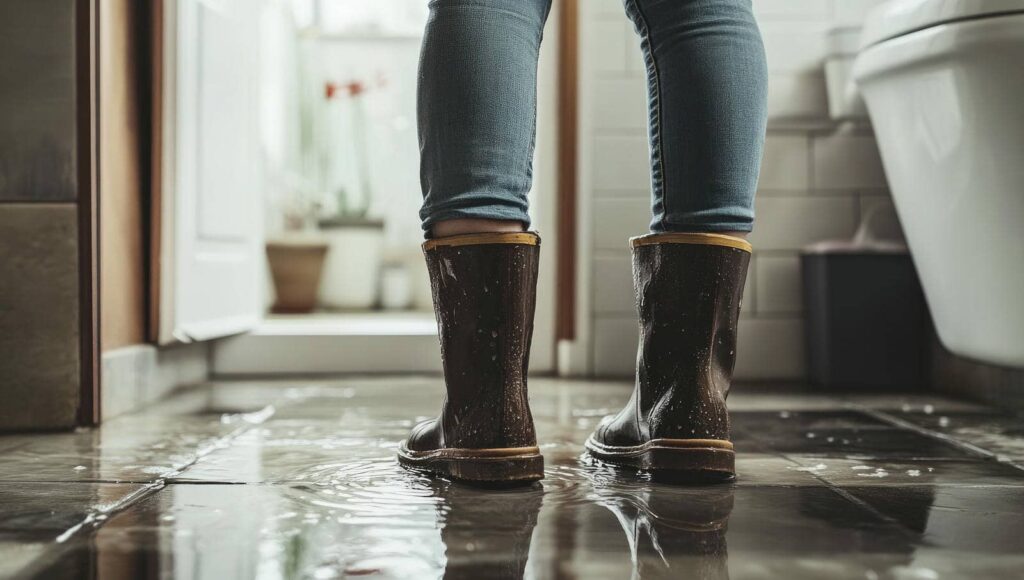
Protective Equipment: Wear heavy-duty gloves, waterproof boots, and a mask or respirator to shield yourself from harmful pathogens.
- Cleanup Supplies: Stock up on a mop, a bucket, and rags to help with initial cleanup tasks.
Disinfectants: Use EPA-approved disinfectants to sanitize affected surfaces and prevent future contamination.
Trash Bags: Have large, durable trash bags on hand for safely disposing of contaminated materials.
Having these supplies ready will keep you safe and ensure you can complete the job efficiently.
Remove Standing Water and Contaminated Materials
With your protective gear and cleanup supplies ready, you can now focus on removing standing water and contaminated materials.
Start by using a submersible pump, if possible, to efficiently eliminate standing water. If the water level is low, a wet/dry vacuum will work well. Always verify that your equipment is suitable for sewage cleanup to avoid further contamination.
Once the standing water is removed, identify and discard any contaminated materials, like carpets, insulation, or drywall, that can’t be cleaned.
Seal these materials in heavy-duty plastic bags to prevent spreading harmful pathogens. Use a shovel for larger debris, making sure you’re cautious about sharp objects.
Don’t forget to check for hidden areas where water may have pooled, as this can lead to mold growth.
Clean and Disinfect Affected Areas
Once you’ve removed all standing water and contaminated materials, it’s vital to thoroughly clean and disinfect the affected areas to eliminate harmful pathogens.
Sewage contamination can pose serious health risks, so using effective cleaning techniques is important. Follow these steps:
Wear Protective Gear: Use gloves, masks, and goggles to protect yourself from pathogens.
Prepare Disinfectant Solution: Mix a solution of one cup of bleach to five gallons of water, or use a commercial-grade disinfectant.
Scrub Surfaces: Apply the disinfectant to all affected surfaces, scrubbing vigorously to remove any remaining debris.
Rinse and Dry: Rinse the surfaces with clean water and allow them to dry completely to prevent mold growth.
Prevent Future Sewage Backups and Water Damage
To prevent future sewage backups and water damage, it’s essential to take proactive measures that maintain the integrity of your plumbing system.
Start with regular plumbing maintenance; check for leaks or corrosion and address them immediately. Use sewage prevention tips like avoiding flushing non-biodegradable items down the toilet and keeping grease out of your drains.
Consider installing a backflow valve to prevent sewage from entering your home during heavy rain or system overloads. Regularly inspect your sewer line for blockages or tree root intrusions, and schedule professional cleanings as needed.
Educate your family about proper waste disposal to foster a collective responsibility for your plumbing.
Review
By following these DIY steps, you can effectively tackle sewage backup cleanup, much like Odysseus steering through treacherous waters. Always prioritize safety, ensuring you’re properly equipped and aware of hazards. Once you’ve removed contaminants and disinfected your space, you’ll restore order to your home. Remember, preventive measures are your best ally against future disasters. Stay vigilant with plumbing maintenance to keep the chaos at bay, ensuring your living environment remains safe and healthy.
Recent Posts
Essential Guide to Flood Damage Restoration Practices
Flood Damage Restoration begins with a fast, organized response to minimize structural damage and protect
Top 10 Flood Damage Restoration Best Practices
Damage Restoration starts with a fast, organized response to minimize property damage and prevent long-term
7 Essential Tips for Flood Damage Restoration
Flood Damage Restoration should begin as soon as it is safe to enter the property,