
Contents
When dealing with smoke damage in your home, understanding effective dehumidification methods is essential. High humidity levels can exacerbate issues like mold growth and persistent odors. By exploring portable dehumidifiers and whole-house systems, you can find solutions tailored to your specific needs. Additionally, integrating air scrubbers and proper ventilation enhances the cleanup process. What you may not realize is how monitoring humidity plays a significant role in achieving a healthy living environment.
Key Takeaways
- Portable dehumidifiers offer targeted moisture control, making them ideal for specific areas affected by smoke damage.
- Whole-house dehumidification systems provide consistent humidity regulation and integrate seamlessly with existing HVAC systems for optimal performance.
- Air scrubbers effectively remove smoke particles and odors, improving air quality during the cleanup process.
- Regular monitoring with hygrometers helps maintain humidity levels between 30% and 60%, crucial for preventing mold growth.
- Seasonal adjustments to dehumidification methods ensure effective moisture control throughout the year, particularly during humid months.
Understanding the Importance of Dehumidification in Smoke Cleanup
Dehumidification plays an essential role in smoke cleanup, especially when you consider how excess moisture can exacerbate the lingering odors and residues associated with fire damage.
When you deal with smoke damage, the humidity in your environment directly impacts air quality. High moisture levels can cause soot and ash particles to remain suspended in the air, making it harder to breathe and increasing health risks. Implementing dehumidification methods helps reduce this moisture, allowing for more effective removal of contaminants and odors.
Furthermore, maintaining ideal humidity levels promotes a healthier living space, as too much moisture can lead to mold growth, complicating the cleanup process.
Using Portable Dehumidifiers for Effective Moisture Control
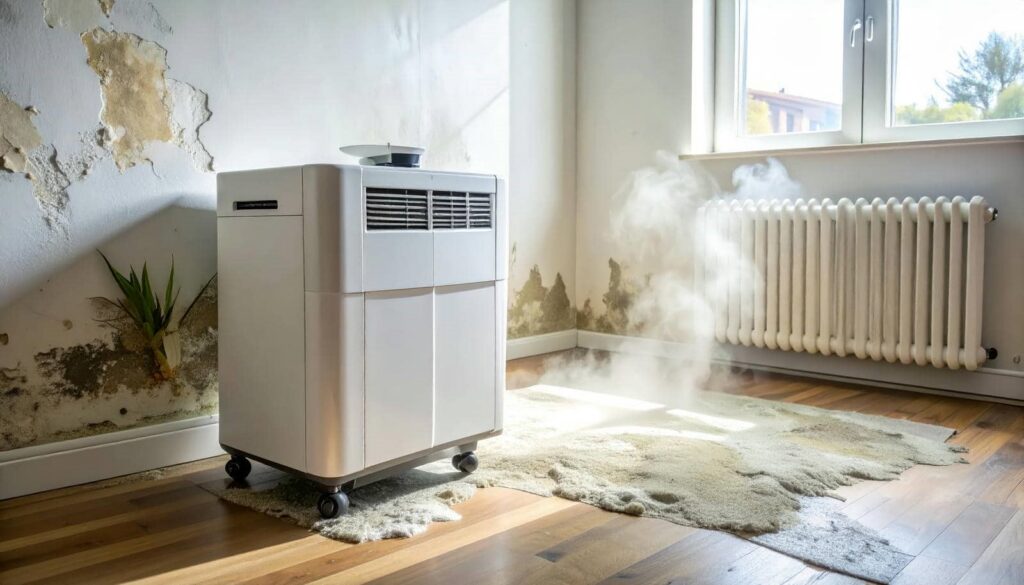
When tackling moisture issues in your home, using portable dehumidifiers can be a game-changer for effective moisture control.
These devices are essential, especially after smoke damage, as they offer numerous portable dehumidifier benefits. They’re easy to move around and can target specific areas where moisture lingers.
Consider these key advantages:
- Targeted Moisture Control: Place them where you need them most.
- Quick Setup: Just plug them in, and you’re good to go.
- Energy Efficient: Many models consume less electricity while providing effective moisture removal.
- Improved Air Quality: Reduces musty odors and promotes a healthier living environment.
Implementing portable dehumidifiers helps in quick recovery from smoke damage and maintains your home’s overall health.
Implementing Whole-House Dehumidification Systems
For homeowners seeking a thorough solution to humidity issues, implementing a whole-house dehumidification system can greatly enhance indoor air quality and comfort.
These systems work by regulating moisture levels throughout your entire home, providing consistent dehumidification efficiency compared to portable units. By integrating with your existing HVAC system, whole-house systems can automatically adjust to humidity fluctuations, ensuring a balanced environment.
Investing in such a system helps eliminate excess moisture and prevent mold growth and musty odors, which are often associated with smoke damage.
You’ll find that these systems operate silently and efficiently, contributing to a healthier living space for you and your family. Additionally, whole-house dehumidifiers can reduce energy costs by improving your HVAC system’s performance, making them a wise choice for long-term humidity management.
The Role of Air Scrubbers in Smoke Cleanup
Air scrubbers play an essential role in smoke cleanup, especially after a fire or when dealing with lingering odors in a home. They help improve air quality by removing harmful particles and contaminants from the air.
Understanding the different air scrubber types can help you choose the right one for your needs.
Consider the following benefits of using air scrubbers:
- Effectively removes smoke particles: They capture soot, ash, and other debris from the air.
- Reduces odors: Many models include activated carbon filters to neutralize unpleasant smells.
- Improves overall air quality: By filtering out allergens and pollutants, they create a healthier living environment.
- Portable options available: Some air scrubbers are compact and easy to move, making them ideal for targeted cleanup.
Investing in an air scrubber can greatly enhance your smoke cleanup efforts and promote a healthier home atmosphere.
Utilizing Fans and Ventilation to Accelerate Drying
To effectively accelerate drying in your home, optimizing airflow through fans and ventilation is key.
By strategically placing fans and utilizing natural ventilation, you can enhance moisture removal from the air and surfaces.
Understanding these techniques can greatly improve your dehumidification efforts.
Airflow Optimization Techniques
How can you maximize the efficiency of your dehumidification efforts?
Employing airflow optimization techniques is essential. By enhancing airflow patterns and implementing effective ventilation strategies, you can greatly speed up the drying process.
Here are some practical tips:
- Position fans strategically to create cross-ventilation.
- Use exhaust fans to remove humid air from enclosed spaces.
- Open windows and doors to encourage fresh air circulation.
- Adjust the direction of fans to direct airflow towards damp areas.
These techniques improve air circulation and facilitate the removal of moisture-laden air.
Natural Ventilation Benefits
Maximizing airflow through optimization techniques lays the groundwork for effective natural ventilation, which can greatly enhance your dehumidification efforts.
By utilizing fans and ensuring fresh circulation, you create an environment that promotes the movement of natural air throughout your space. This approach accelerates drying and helps eliminate lingering odors from smoke.
Positioning fans strategically can facilitate airflow, drawing in outdoor air while expelling stale indoor air. Additionally, keeping windows and vents open during favorable weather conditions allows for enhanced ventilation.
The result is a healthier living space, free from excess humidity and residual smoke particles. Embracing natural ventilation methods fosters a sense of community and belonging as you take proactive steps toward a cleaner, more comfortable home.
Monitoring Humidity Levels for Optimal Results
To achieve the best dehumidification results, you need to monitor humidity levels effectively.
Using humidity measurement tools can help you determine if you’re within the ideal humidity range, typically between 30% and 60%.
Establishing a regular monitoring schedule ensures you can promptly adjust your dehumidification methods as needed.
Humidity Measurement Tools
Humidity measurement tools are essential for maintaining ideal indoor conditions and preventing issues like mold growth and structural damage.
To effectively monitor humidity levels, you should consider using:
Humidity sensors: These devices provide real-time data on indoor moisture levels.
Moisture meters: Perfect for checking specific surfaces, ensuring they’re not retaining excess moisture.
Hygrometers: Measure relative humidity to help you understand overall moisture in the air.
Digital monitors: Offer advanced features like alerts and historical data tracking.
Ideal Humidity Range
Maintaining the right indoor humidity levels is key to creating a comfortable living environment and safeguarding your home. The ideal humidity range typically falls between 30% and 60%. This moisture balance helps prevent mold growth, reduces allergens, and preserves structural integrity.
When humidity levels exceed this range, your home may feel damp and uncomfortable, while low humidity can lead to dry skin and respiratory issues. By monitoring and adjusting humidity levels, you can ensure a healthier atmosphere.
Utilizing dehumidifiers or humidifiers when necessary can help you maintain that ideal humidity. Ultimately, keeping your home within this range enhances comfort and contributes to a safer, more enjoyable living space for you and your family.
Regular Monitoring Schedule
While it’s easy to overlook, regularly monitoring indoor humidity levels is essential for maintaining a comfortable and healthy home environment.
To ensure effective scheduling and regular maintenance, consider the following practices:
- Use a hygrometer to track humidity levels accurately.
- Schedule checks at least once a week, adjusting for seasonal changes.
- Set reminders in your calendar to stay consistent.
- Review and adjust your dehumidification methods as needed.
Frequently Asked Questions
Can Dehumidifiers Help Remove Smoke Odor From My Home?
Yes, dehumidifiers can effectively reduce smoke odor by minimizing moisture and helping to eliminate smoke residue. Their effectiveness in creating a drier environment aids in breaking down lingering odors, enhancing your home’s overall air quality.
How Long Does the Dehumidification Process Typically Take?
The dehumidification timeline typically ranges from a few hours to several days. Factors affecting this include humidity levels, the size of the space, and the efficiency of your dehumidifier, all influencing how quickly moisture is removed.
Will Dehumidification Damage My Furniture or Belongings?
Dehumidification won’t damage your furniture or belongings if done correctly. Proper techniques ensure furniture protection and belongings’ safety, helping to maintain their integrity while effectively reducing moisture levels in your home.
Can I Use My HVAC System for Dehumidification?
You can definitely use your HVAC system for dehumidification, but its efficiency varies. While it manages humidity, dedicated dehumidifier types often outperform in extreme conditions, ensuring your belongings stay safe and sound amidst moisture battles.
What Is the Ideal Humidity Level After Smoke Cleanup?
The ideal humidity level after smoke cleanup is between 30% and 60%. Maintaining this range helps prevent mold growth and further damage, ensuring your home recovers effectively from smoke damage while promoting a comfortable environment.
Summary
In your journey to restore a smoke-damaged home, dehumidification acts as the steady lighthouse guiding you through the fog of moisture and odors. By employing portable dehumidifiers, whole-house systems, and air scrubbers, you can reclaim your space from the shadows of smoke. Don’t forget to monitor humidity levels, ensuring your home’s atmosphere remains a sanctuary rather than a breeding ground for mold. Embrace these methods, and watch as your living environment transforms, reflecting resilience and renewal.
Recent Posts
3 Best Restoration Tools for Water Damage Repair
Water damage can seep into your home like an unwanted guest, leaving destruction in its
7 Best Technologies for Smoke and Soot Cleanup
Many people underestimate the impact of soot and smoke on indoor air quality. Effective cleanup
What Innovations Aid Smoke and Soot Cleanup?
When it comes to smoke and soot cleanup, innovations play an essential role in enhancing